
Oral Surgery - Washington, DC Dentist

Oral surgery has been used on patients since ancient and medieval times. Today it is a common procedure performed daily in dentist offices across America. Surgery is necessary when there are dental problems that can’t be resolved with cleanings, scaling or other non-invasive treatments. Oral surgeons use X-rays to pinpoint the problem within the gums, jaw, bone tissue or teeth, and resolve them with surgical procedures at the dentist’s office. Learn more about oral surgery and how it can benefit your dental health.
About Oral Surgery in Dentistry
Oral (maxillofacial) surgery is used to treat diseases and conditions in the head—mostly the face and jaw. Dental surgeons are the doctors who perform these types of surgeries on patients. Oral surgery is considered the oldest specialized service in the field of dentistry.
Types of Oral & Maxillofacial Surgery
There are a number of procedures that fall under the umbrella of oral and maxillofacial surgery. Most either involve removing something that’s causing a problem or adding something that will help reconstruct your smile.
Here are a few of the most common types of oral surgery:
- Removal of wisdom teeth
- Extraction of an infected tooth
- Periodontal surgery to clear up infections
- Bone grafting surgery to reinforce and regrow bone tissue
- Installation of dental implants
- Surgery to relieve pain due to TMJ disorder
- Removal of cysts, tumors or other growths in the mouth
Benefits of Oral Surgery
Oral surgery allows your dentist to remove problems that are causing pain or discomfort and give your mouth a chance to heal. Some procedures help restructure your smile to improve your overall facial appearance. Many patients are happy to learn that most oral surgeries will happen in the comfort of the dentist’s office, instead of a hospital.
Tooth Extractions
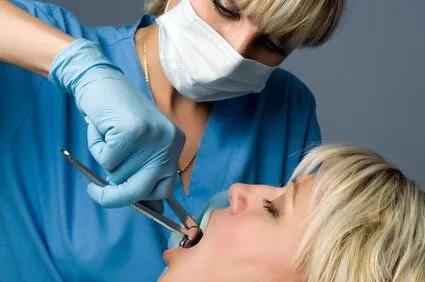
Tooth extraction is the complete removal of a tooth from its socket. It’s often needed in cases where the tooth is too damaged to save, or when existing teeth are blocking other teeth from erupting.
The only way to know for sure if a tooth needs to be extracted is to have a thorough exam with your dentist in Washington, DC. If you find out that you need an extraction, don’t put it off! Trying to avoid a tooth extraction can lead to pain, swelling, and infection--but once your appointment is over, your pain will be relieved and your dental health greatly improved.
Reasons to Consider Tooth Extraction
Extensive Damage
When fillings, root canals, and crowns aren’t enough to save a tooth, it will likely need to be extracted and then replaced with a prosthetic tooth. Children may need baby teeth extracted if they suffer from extensive decay early in life.
Risk of Infection
Anyone with a weakened immune system is at higher risk for tooth decay and gum disease, and may need to have teeth extracted to prevent infection from spreading throughout the body. People at high risk of infection include cancer patients and those who have had organ transplants.
Impacted Teeth
An impacted tooth is one that is blocked from pushing through the gum, either by other teeth or by excessive soft tissue. This can lead to inflammation and jaw pain, as well as an increased risk of gum disease and decay in the surrounding areas. Impacted teeth are frequently candidates for extraction to prevent complications.
Preparing For Orthodontics
Sometimes there’s simply not enough room in the arch for all the teeth to sit comfortably. In these cases, some teeth may need to be extracted to solve the crowding problem. Crowding can also cause an adult tooth to erupt in the wrong place, failing to push out the baby tooth. The baby tooth must be removed before the crowding can be corrected with orthodontics.
Loose Teeth Due to Periodontal (Gum) Disease
When the gums are infected, the underlying bone can begin to break down and cause teeth to become loose. Sometimes this process can be reversed with bone grafting, but if this isn’t an option for your health condition, then extraction may be necessary.